
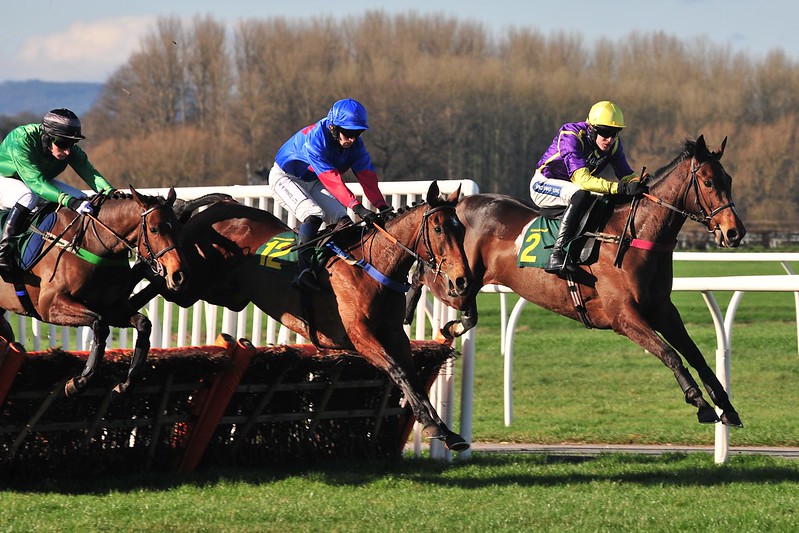
The Dublin Racing Festival of 2024 will be remembered by some as the “Willie Mullins Festival” following the trainer’s clean sweep of the eight Grade One contests last weekend. For some enthusiasts it will be another example of the declining levels of competition in National Hunt Racing in Ireland, while for others it will simply be another demonstration of the superior standards of training employed by the Master Of Closutton. Normally, we can expect Gordon Elliott to put up a fight, but even he had no answer to the onslaught (although the Caldwell dispersal sale weakened his hand somewhat). The going was advertised as being softer on Sunday, although the winning times were faster on Day Two. Let’s compare the big performances on the clock through speed figures and sectional timing over the two days. As always with the speed figures, I will be using the Official BHA Formbook scale where (117) will represent Grade 1 Par, and each step down the Class Ladder will represent a drop of two points (two lengths per mile), with (100) representing a standard (median) figure. Speed ratings will be inserted after the relevant horse’s name.
Fact To File The Festival King
While Galopin Des Champs, or perhaps even Ballyburn, may have looked the most impressive over the two days, it was in fact the Willie Mullins trained French bred Fact To File (123) who achieved the best speed figure in the Grade 1 Ladbrokes Novice Chase over the extended two mile five furlong trip, when I compared the winning times to my median times. The fact that the e88,500 first prize race could attract just two runners was not a great indicator of the current well-being of the National Hunt game. Although low in numbers, we still had the previously unbeaten over fences Gaelic Warrior to look forward to, who had recently treated Il Etait Temps with contempt at Limerick in a strong time, while looking very impressive. The slight on him in the past has always been his tendency to jump out to his right. Could he get away with it at the top level? In the build-up to the race, over on Racing Tv, one could easily be convinced that this was a horse who had such an engine that it wouldn’t matter which way round he went. In fact, we were informed by Racing Tv’s “sectional timing expert” Angus McNae that the new RaceIQ data (more on this later) revealed that Gaelic Warrior had gained thirty three lengths on his rivals through superior jumping when cantering home on his fencing debut at Punchestown. Angus also informed us that this was the most lengths gained jumping ever recorded since the tracking had commenced this National Hunt season. Gaelic Warrior did try to make all the running again, but as usual his old habit of jumping out to his right was on display. The winner tracked him all the way round (jumping to his right on occasions as well) before taking up the running four out, following a peck on landing from the leader. The writing was soon on the wall, and a violent jump to the right at the last resulted in Paul Townend unseating on Gaelic Warrior. The winner looks an exciting prospect going forward, but connections have still to decide his target for Cheltenham.
Ballyburn Faster Than State Man?
It won’t have gone unnoticed by many students of the clock that the exciting novice hurdler Ballyburn (117) recorded a faster winning time than the multiple Grade 1 winning hurdler State Man (116) when taking the Grade 1 Novice Hurdle on Sunday by seven lengths from Slade Steel (113). While the poor showing from Grade 1 winner Farren Glory (86) may have slightly diluted the form, this was still a big step up from the exciting six-year-old. Even taking into account the fact that the novices jumped one less hurdle than the Champion Hurdle contenders, this was still a noteworthy performance. As always with noteworthy performances I like to use the sectional timing data on offer from Course Track, which can be viewed on the Racing Tv website, to compare relevant performances. I used the Ballyburn and Lord Erskine winning times to frame a going allowance for the hurdles track, which came out 30 lengths per mile slower than standard (+0.75 seconds per furlong). The table below shows the adjusted times for both Ballyburn and State Man on the day. I have added 0.70 seconds for each hurdle less than the standard nine that were jumped by both winners (i.e +0.70secs to State Man’s time, and +1.40secs to Ballyburn’s time)
Table Headings have been abbreviated as: SF (Speed Figure); GA (Going Allowance In Seconds Per Furlong); Total GA (Seconds Per Furlong x Race Distance); Adj. Time (Adjusted Time – Winning Time minus Total Going Allowance); SECT TO 3F (Winner’s sectional Time to three furlong mark); Adj. Sect To 3F (Winner’s adjusted sectional time to three furlong mark); Adj. 3F TO FIN (Winner’s Adjusted Sectional Time from the three furlong mark to the finish). It should be noted that accessing the table on a personal computer will give a better view than on a mobile phone.
| WINNER | TIME | SF | GA | Total GA | Adj. Time | SECT TO 3F | Adj. Sect To 3F | Adj. 3F TO FIN |
| Ballyburn | 4.01.00 | [117] | [+0.75] | [-12.00] | 3.49.00 | 3.15.77 | [3.06.02] | [42.98] |
| State Man | 4.01.70 | [116] | [+0.75] | [-12.00] | 3.49.70 | 3.19.09 | [3.09.34] | [40.36] |
As usual the final two columns are the ones to concentrate on. Not a lot we can take from these two performances as both horses reach the three furlong point at very different times. What if we had a race where State Man reached the three furlong point in a race at Leopardstown around the 3.06.00 mark? Well, we have one! On the 29th December State Man won the Grade 1 Matheson Hurdle over this course and distance. Let’s crunch the numbers, as they say…..I used the State Man and Jetara races on Matheson Day in framing a going allowance for the hurdles track.
| WINNER | TIME | SF | GA | Total GA | Adj. Time | SECT TO 3F | Adj. Sect To 3F | Adj. 3F TO FIN |
| Ballyburn | 4.01.00 | [117] | [+0.75] | [-12.00] | 3.49.00 | 3.15.77 | [3.06.02] | [42.98] |
| State Man | 3.55.60 | [121] | [+0.51] | [-8.16] | 3.47.44 | 3.13.59 | [3.06.96] | [40.48] |
As we can see from the final two columns Ballyburn’s performance on DRF day may have been faster than State Man’s, but when we find a race with similar pace there would have only been one winner if Ballyburn took State Man on in the Irish Champion Hurdle. Which is fair enough considering he is still a novice. Still, it shows the benefits of a balanced approach to analysis. Something which can be difficult to find regularly in other channels…
Business As Usual For Galopin Des Champs
Galopin Des Champs (117) equalled par when taking the Grade 1 Paddy Power Irish Gold Cup finishing 4 1/2 lengths ahead of Fastorslow (115). The race fit nicely into the winner’s cycle just 37 days after his Grade 1 Savills Chase win. The winner made all, and despite not being fluent four out, comfortably held the runner-up at the line. Followers of Fastorslow will point to the fact that it was his first run back after a 69 day break, and will be looking forward to the re-match in next month’s Gold Cup at Cheltenham.
It’s Time For Il Etait Temps Again
The Goffs Irish Arkle went the way of the Willie Mullins trained Il Etait Temps (110) who once again sprang a bit of a surprise on this card, when lowering the colours of the previously unbeaten Marine Nationale (105). A 110.7% Race Finish revealed a less than truly run race, where it may pay to tread carefully when evaluating the form. It is fair to say that we didn’t get to see the best version of the Barry Connell trained seven-year-old who raced less prominently than when so impressive on his chasing debut. Connections of the beaten favourite could offer no explanation for the poor performance, and still have the Arkle at Cheltenham in mind, for which he has been eased to a general price of 5/2. Connections of the winner are looking forward to the same race next month, and punters who fancy his chances can still avail of 5/1 in places.
El Fabiolo Chase Champion
The Willie Mullins trained El Fabiolo (107) took the Grade 1 Ladbrokes Dublin Chase, over two miles and a furlong, by 8 1/2 lengths from the seven-year-old mare Dinoblue (103). This was his fourth Grade 1 win over fences, and as usual his jumping lacked fluency. Entitled to win on the ratings as he did, he is now a best price 1/2 favourite for next month’s Champion Chase. Backers will be hoping that he can stay on his feet all the way round, as he has done everytime over fences so far in his career.
RaceIQ Lengths Gained Jumping
As mentioned earlier, Racing Tv have been promoting their latest data metric which can indicate how many lengths a horse has gained or lost through it’s jumping during a race. While I am all for innovations in the sport, it is still very early days with regards this data, and we have yet to be shown a worked example of how these lengths gained or lost have been arrived at. Apparently a jumping “envelope” can be pinpointed from thirty metres before an obstacle to thirty metres after an obstacle, from which the speed of the horse entering and exiting this envelope can be measured. Each horse’s average speed at each obstacle is then taken, and depending on how many horses are in the race, the lengths gained or lost throughout the race for each horse can be calculated. My first observation from this metric is that the envelope doesn’t measure jumping alone, as the horse’s speed through the air alone is not measured. Also the fact that for some races the “envelope” could involve almost two furlongs of ground (mostly covering time not spent in the air) is a concern. My next concern would be that the data is apparently dependent on the number of horses in the race. From what I can make out, it would be like trying to calculate an average finishing time for the entire field in a race. It would appear to be a fruitless task compiled with flawed logic. Until more information is provided it looks like a metric to tread carefully with.
Until the next instalment,
Stay Lucky,
Graham