
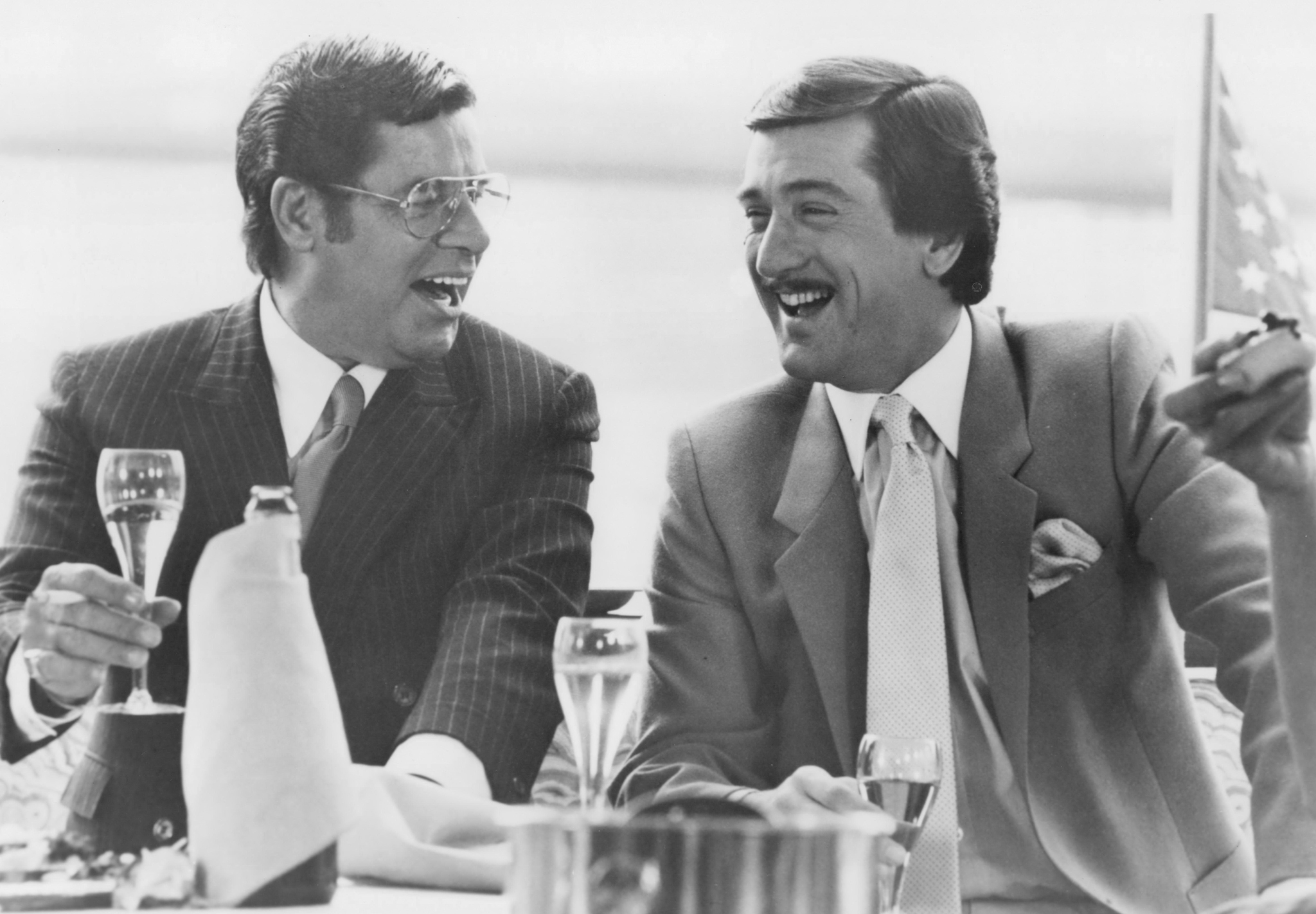
Now that you are capable of putting together some speed figures for any racetrack, you may start to get the feeling that your speed figures are “the way, the truth and the light”, as the great Andy Beyer once wrote. You will win many races where your top figure horse has won easily, just as your sacred numbers had predicted. You may even start to believe that the Good Lord has come down and chosen you to be “The King”. Just like Rupert Pupkin’s fantasies in Martin Scorsese’s 1982 movie “The King Of Comedy” you will be sorely mistaken.
Becoming too reliant on your speed figures and ignoring the basics of the sport will not allow you to be a complete horse racing analyst. Speed figures should only be used as a guide as to what your horse has achieved in the past. They should not be the deciding factor for what your horse is going to achieve today. The most important part of using the speed figures from the past is knowing how the speed figure was achieved.
A good example may be a horse that gets to race in the lead without pace pressure from another horse and maintains that lead from start to finish. Or a horse that gets to race nearest a rail that has shown itself to be a massive advantage in the past. What happens when the same horses don’t get those ideal conditions again? That big speed figure they ran to in the past will more than likely not be repeated. The problem with a lot of big speed figures is that the figure has been achieved when there was a decent pace set by the leaders in the race. So what happens when there is very little pace in the race? It takes a very good horse to win in both situations.
PACE MAKES THE RACE
Which brings us to another important factor in horse racing analysis. Pace. Knowing what time the leaders in a race achieved, for a certain section, is a very important piece of data. There are many race timing services out there today that can be used for UK and Irish Racing. Attheraces and RacingTV both have sectional timing charts on their websites for most, if not all, races. Both sites use GPS tracking devices which have been shown recently and in the past to be less accurate and contain more errors than Beam tracking devices. When analysing Horse Racing jurisdictions, the template for excellence is nearly always found in Hong Kong. With only two tracks, Happy Valley and Sha Tin, the level of prizemoney can afford to be up to ten times greater than the UK, in most cases. Hong Kong uses a Beam tracking device service and the sectional times from these tracks can be trusted a lot more.
Before sectional timing services in the UK like Turftrax, Total Performance Data and CourseTrack a lot of punters like myself had to make do with handmade sectional timing. I can recall having a VCR that would frame advance the recording to (0.04) of a second, with twenty five frames per second. Today with software like Kinovea and Hard Drive Recorders we can still do our own sectional timing which, believe it or not, still has a role to play. Too frequently timing malfunctions rear their ugly head on UK tracks, and thankfully now the BHA have stamped Hand Time right next to the winning time of these races on the BHA website.
When you start to become more pace aware in your studies you will understand why certain unexpected results occurred. Let’s take a track like Dundalk’s mile (8 furlong) course. Compiling a set of decently run 1 mile handicap race winning times for Dundalk, might lead you to determine that a standard pace to the 3 furlong point would be around the 1 minute 2 second mark. Using sectional timing you can then determine which races were run to suit which style of performance horses. A hold up performer may be labelled as one which races 3 lengths or more off the pace. A front running horse may be suited to getting to the 3 furlong pole in a time slower than 1 minute 2 seconds. A hold up performer may be more suited by a pace that reaches the 3 furlong point in a faster time than 1 minute 2 seconds. We can then determine which races were run to suit which horses and implement a notebook for future races. We would call this Pace Handicapping.
Sometimes we need to analyse why our Top Figure horse, we will call him Big Number, earned a (103) speed figure in his last race and why a (100) speed figure horse, we will call him Little Number, beat Big Number in today’s race. It may come down to the fact that a slower pace in his last race enabled Little Number to hide his ability, when it came to his previous race winning time. Now, thanks to Sectional Timing, we can analyse the sectional times for Little Number and compare it to sectional times from similar performance horses. This will highlight certain performance markers for races run at a certain pace. In other words we should not be comparing a (103) speed figure horse to a (101) speed figure horse just on the basis of race winning time. Using Sectional Timing we can establish pace performance pars combined with final sectional performance. We would first compile a list of pace performances to our sectional point in the race. Using this time, combined with a finishing sectional time, we could then highlight horses that may not have a big speed figure, but may have a standout sectional time. All of this would simply highlight the importance of Sectional Timing and Race Timing Accuracy when evaluating horse race performance. Until the next Horse Race musings…Stay Lucky!